
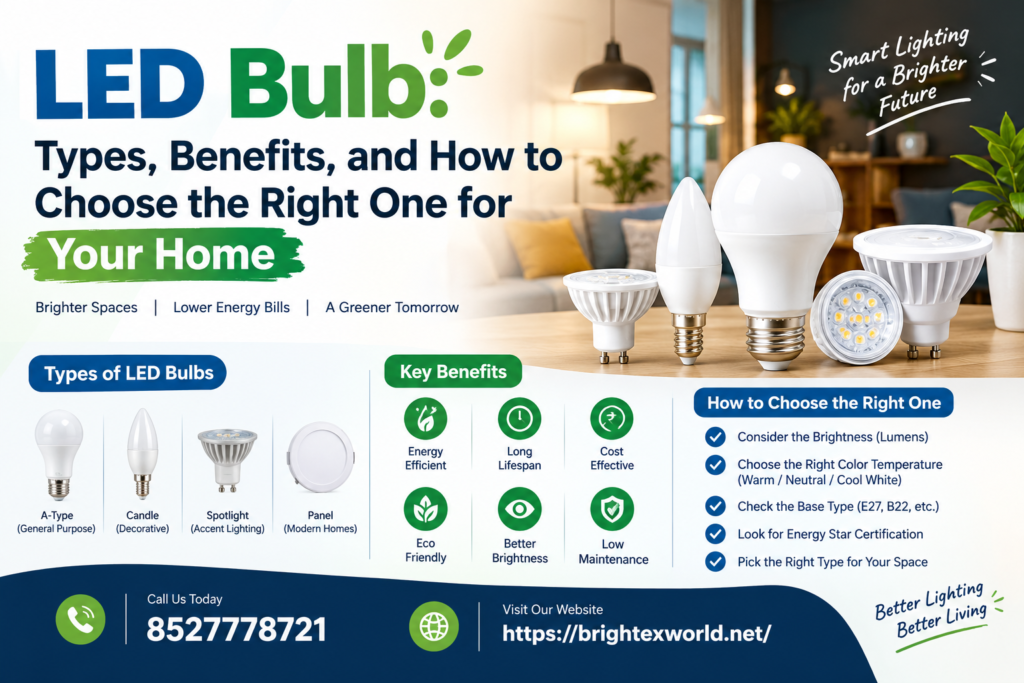
Walk into any room at dusk and you will notice how much the light decides the mood. Soft light makes a bedroom feel calm. Bright, even light makes a kitchen easier to work in. Good lighting also affects comfort, eye strain and your monthly electricity bill. That is why the humble LED bulb has become the default choice in many homes: it is energy-efficient, durable and available in a wide range of styles.
Still, choosing one is not as simple as picking a wattage. In this guide you will learn how an LED bulb works, the main types, the benefits, and how to match the right bulb to each room. You will also find practical buying tips and answers to common questions.
What Is an LED Bulb?
LED stands for Light Emitting Diode. An LED bulb produces light when electric current passes through a small semiconductor chip. The electrons in the chip release energy as light, rather than mostly as heat.
How LED Technology Works
An LED bulb is made of a few key parts:
- LED chips: The light-emitting elements.
- Driver: An electronic circuit that converts and regulates the power supplied to the chips.
- Heat sink: Helps carry heat away from the chips so they can operate properly.
- Cover or diffuser: Spreads the light and shapes its appearance.
How LED Differs from Incandescent and CFL Bulbs
| Feature | Incandescent | CFL | LED Bulb |
| How it makes light | Heats a thin filament | Excites gas inside a tube | Passes current through a semiconductor |
| Energy efficiency | Lowest of the three | Better than incandescent | Generally the best of the three |
| Heat output | High | Moderate | Generally lower |
| Typical rated life | Shortest | Longer than incandescent | Generally the longest |
| Design variety | Limited | Limited | Wide range of shapes and features |
Actual performance varies by product, so always read the specifications on the pack.
Types of LED Bulbs
There are many types of LED bulbs, and each suits different needs.
Standard LED Bulbs
These are all-purpose bulbs for everyday lighting. They fit many ordinary fixtures and are a practical choice for most rooms.
Dimmable LED Bulbs
Dimmable bulbs let you adjust brightness for different moods and tasks. They work well in living rooms, dining areas and bedrooms. They need a compatible dimmer switch.
Smart LED Bulbs
Smart bulbs can usually be controlled through an app or voice assistant. Depending on the model, they may offer scheduling, brightness control and colour changes. Check what setup they require.
Decorative LED Bulbs
Decorative bulbs come in candle, globe and vintage-style filament looks. They suit chandeliers, pendant lights and visible fixtures where appearance matters.
Colour-Changing LED Bulbs
These bulbs can show a range of colours. They are popular for ambience, celebrations and entertainment corners, though they are less suited to task lighting.
Different Shapes and Base Fittings
Bulbs vary in shape, such as standard, candle, globe and tube styles. They also come with different bases, including screw and pin types in various sizes. The bulb must match your holder.
Major Benefits of an LED Bulb
- Energy efficiency and lower electricity consumption: For similar brightness, LED bulbs typically use less power than traditional ones.
- Long operational life: Many LED bulbs are rated for long use. Check the rated life on the product.
- Reduced heat generation: They usually run cooler than incandescent bulbs, which can be helpful in warm rooms.
- Durability and reliability: There is no delicate filament, though the cover and electronics still need careful handling.
- Range of brightness and colour options: You can find bulbs in various lumen levels and colour temperatures.
- Lower replacement frequency: A longer life can mean fewer changes.
- Environmental benefits: Lower energy use and fewer replacements can reduce waste and electricity demand.
Savings and lifespan depend on the product, how long you use it and local electricity rates.
How to Choose the Right LED Bulb for Your Home
Brightness in Lumens
Lumens tell you how much light the bulb produces. Compare lumens across products to judge brightness.
Wattage and Electricity Consumption
Wattage shows how much power the bulb draws. A lower wattage for the same lumens means more efficient lighting.
Colour Temperature
Colour temperature is measured in kelvin (K).
- Warm white (about 2700K–3000K): Soft, yellowish light that feels cosy.
- Neutral white (about 3500K–4500K): Balanced light that feels clean without being harsh.
- Cool white (about 5000K–6500K): Crisp, bluish-white light often associated with daylight.
Bulb Shape and Base Compatibility
Check the shape and the base type of your fixture. A bulb that does not fit properly cannot work well.
Dimming and Smart Features
If you want dimming or smart control, confirm that the bulb supports it and that your switch or app setup is compatible.
Room Size and Lighting Needs
Larger rooms generally need more total light. Think about whether you need ambient, task or accent lighting.
Product Quality, Safety and Lifespan
Look for clear product information, including rated life and any safety details the maker provides. Be cautious about products that give no specifications.
A Practical Example
Suppose you want a bulb for a reading corner. You might look for neutral white light, a lumen level suited to reading, a base that fits your lamp, and no need for dimming. Compare two or three bulbs on those points rather than on price alone.
Choosing LED Bulbs for Different Rooms
These are flexible suggestions, not strict rules.
- Living room: Warm white gives a welcoming feel. Dimmable bulbs add flexibility.
- Bedroom: Warm, relaxing light supports winding down.
- Kitchen: Neutral or cool white light gives clear, practical task lighting.
- Bathroom: Choose enough brightness for daily routines like grooming. Check that the bulb suits the fitting and conditions.
- Study room or home office: Neutral white light supports reading and focus.
- Outdoor areas: Use bulbs and fixtures made for outdoor conditions. Check the product details for weather resistance.
LED Bulb Wattage vs Brightness
Many people still shop by watts, a habit from the incandescent era. But watts and lumens measure different things.
- Wattage shows how much electricity the bulb uses.
- Lumens show how much light the bulb gives out.
With LED lighting, a low-wattage bulb can deliver strong brightness. So when you compare products, check the lumens first, then look at the wattage to see how efficiently that light is produced.
Choosing Brightness for the Application
- For relaxing areas, choose softer light.
- For task areas such as kitchens and study desks, choose brighter light.
- Avoid a bulb much brighter than you need, as it can feel harsh and waste electricity.
The right level also depends on room size, wall colours and personal preference.
Common Mistakes to Avoid When Buying LED Bulbs
- Choosing the wrong brightness: Too dim causes strain, and too bright is uncomfortable.
- Selecting an unsuitable colour temperature: Cool white in a bedroom may feel stark.
- Ignoring base compatibility: Check the base type and size first.
- Using incompatible dimmers: Pair dimmable bulbs with suitable dimmers.
- Overlooking product quality: Read the specifications and prefer products with clear information.
Tips for Maximising LED Bulb Performance
- Choose compatible fixtures: Make sure the fitting suits the bulb’s size and type.
- Allow proper ventilation: Fully enclosed fixtures can trap heat, so check the bulb’s guidance.
- Use suitable dimmers: Follow the maker’s advice on compatible dimmers.
- Switch off unnecessary lights: This is the easiest way to reduce electricity use.
- Follow manufacturer instructions: Installation and usage guidance helps the bulb perform as intended.
- Keep bulbs clean: Switch off, let the bulb cool, then wipe away dust.
Explore LED Lighting Solutions with Brightex World
Once you know your brightness, colour and fitting needs, it becomes easier to compare products. Brightex World offers lighting products and solutions. You can visit its website at https://brightexworld.net/ to see what is available. For details on specifications and availability, contact the team directly.
Frequently Asked Questions (FAQs)
1. What is an LED bulb, and how does it work?
An LED bulb produces light when current passes through a semiconductor chip. A driver regulates the power, and a heat sink helps manage heat.
2. How long does an LED bulb typically last?
Many LED bulbs are rated for a long life, but the figure varies by product and use. Check the rated life on the pack or product page.
3. Do LED bulbs consume less electricity than traditional bulbs?
Generally, yes. For similar brightness, LED bulbs typically use less power than incandescent bulbs. Actual savings depend on the product and usage.
4. Which LED bulb is best for home use?
It depends on the room and fitting. Check lumens, colour temperature, base type and dimming compatibility to find the best LED bulb for home use in each space.
5. What colour temperature is suitable for bedrooms?
Warm white light, roughly 2700K–3000K, is a common choice for a relaxed feel. Personal preference matters.
6. How many lumens are required for a room?
It varies with room size, use and preference. Task areas generally need more light than relaxing spaces. Compare lumen ratings and choose a suitable level.
7. Are LED bulbs worth the investment?
Many people find them worthwhile because of lower power use and long rated life. The value depends on the product quality, how often you use the bulb and your electricity costs.
Contact Brightex Future Lighting Private Limited
- Address: A Block, 115, Dharampal Satyapal Road, Sector 69, Noida, Uttar Pradesh – 201309, India
- Phone: +91-8527778721
- Email: sales@brightexworld.net
- Website: https://brightexworld.net/